

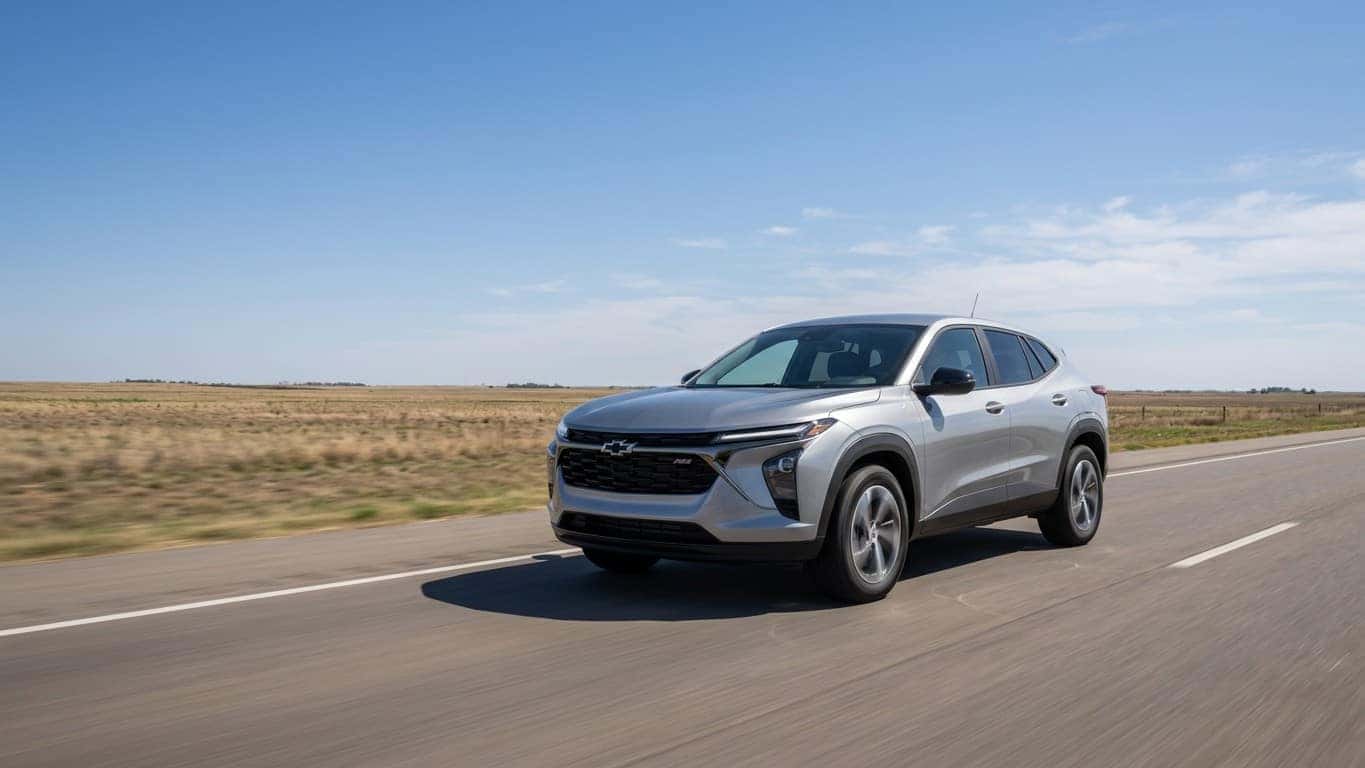
2026 Chevrolet Trax Fuel Economy: Real Numbers for Oklahoma Drivers
Fuel economy is one of the few Trax specs that doesn't change no matter which trim you pick — LS and ACTIV get identical MPG, because they share the identical engine, transmission, and drivetrain. That makes the fuel economy conversation simpler than the trim conversation: there's one number, and it's a genuinely good one for the class.
Our take, plainly: a lot of shoppers assume a small SUV like Trax will disappoint on fuel economy compared to a sedan. It won't. 29 MPG combined is competitive with, and in some cases better than, several small SUVs that cost thousands more.
The Numbers
All five 2026 Trax trims — LS, 1RS, LT, 2RS, ACTIV — are rated identically: 29 MPG combined, 28 city, 31 highway. Trax runs on regular unleaded gasoline; no premium fuel requirement, no flex-fuel or E85 variant offered. The EPA's own annual fuel cost estimate, based on 15,000 miles a year at their reference gas price, lands around $2,100 — and that number tracks closely with what Oklahoma drivers are actually paying at the pump today.
For context against Trax's closest competitors: the Hyundai Venue edges it out slightly at 31 MPG combined, while the Honda HR-V (28 MPG FWD, 27 MPG AWD) and the discontinued Kia Soul (30–31 MPG) land in a similar range. See our full Trax vs. competitors comparison for the complete breakdown.
Why the 3-Cylinder Is Efficient
The 1.2L turbocharged 3-cylinder that powers every Trax trim is smaller in displacement than what most small SUVs use, and that's by design, not a corner cut. A smaller engine with a turbocharger burns less fuel at idle and light throttle — most daily driving — while the turbo makes up the power difference when you actually need it, like merging onto the highway. It's the same logic manufacturers have used across the industry for the past decade: small displacement plus forced induction for everyday efficiency without sacrificing usable power (137 hp, 162 lb-ft is plenty for a vehicle this size).
What It Costs to Commute From Here
For Carter customers commuting into Oklahoma City from Okarche, Kingfisher, El Reno, or Yukon, fuel cost is often a bigger factor than sticker price over the life of the vehicle. At 29 MPG combined and roughly $4.00/gallon Oklahoma gas, a 40-mile round-trip commute costs about $5.50 a day in fuel — call it $120 a month for a five-day workweek, before any weekend or errand driving.
| Monthly Mileage | Gallons Used (29 MPG) | Estimated Cost* |
|---|---|---|
| 800 miles (light commute) | ~27.6 gal | ~$110 |
| 1,250 miles (moderate commute) | ~43.1 gal | ~$172 |
| 1,600 miles (longer commute) | ~55.2 gal | ~$221 |
*Estimated at Oklahoma's approximate September 2026 average of $4.00/gallon regular unleaded. Actual costs vary with driving style, terrain, and gas prices at time of purchase.
Getting the Most Out of a Tank
- Highway MPG (31) beats city MPG (28) — steady highway cruising is where Trax is most efficient
- Smooth, gradual acceleration uses the turbo more efficiently than quick throttle jabs
- Keep tires at the recommended pressure — check the driver's door jamb sticker, not the tire sidewall max
- Regular unleaded is all Trax needs — premium fuel offers no benefit on this engine
- Combine short local errands into one trip when possible; city stop-and-go driving is where any small SUV's MPG drops the most
Frequently Asked Questions
What is the gas mileage on a 2026 Chevrolet Trax?
Every 2026 Trax trim is EPA-rated at 29 MPG combined, 28 MPG city, and 31 MPG highway, since all trims share the same 1.2L turbo 3-cylinder engine.
Does the Trax trim level affect fuel economy?
No. LS, 1RS, LT, 2RS, and ACTIV all carry identical EPA ratings because they share the same engine, transmission, and front-wheel-drive layout.
Does the Chevrolet Trax need premium gas?
No. The Trax's 1.2L turbo engine is designed to run on regular unleaded gasoline. Premium fuel isn't required and won't improve performance or economy on this engine.
How much does it cost to fill up a Trax?
That depends on tank size and current gas prices; ask your Carter salesperson for exact tank capacity on the trim you're considering. At Oklahoma's roughly $4.00/gallon average, a full tank generally runs in the $45–$55 range depending on how empty it was.
Is the Trax's 3-cylinder engine reliable?
Turbocharged 3-cylinder engines are now common across the industry and are engineered for daily use, not a novelty. As with any vehicle, following the recommended maintenance schedule is what protects long-term reliability — see our Trax maintenance guide.
Common Questions
Sources
- 2026 Chevrolet Trax EPA fuel economy ratings — fueleconomy.gov, Edmunds.com
- 2026 Chevrolet Trax specs — Chevrolet.com
- Oklahoma average gas prices, September 2026 — KSWO, Fuelwide.com